A plan for the tabletop ecosystem we're building: open-source games, modular engines, and a marketplace for the modders who'll fill it.
Every rulebook is forkable. Every component is replaceable. Every variant is a pull request waiting to happen. Modders aren't a side channel — they're how the catalogue grows.
Not a publisher. Not a platform. A toolkit — modular game engines, a print-on-demand pipeline, and a marketplace — that turns the boards on your shelf into the boards you wanted them to be.
Territory. Attrition. Nuclear brinkmanship.
A hex-tile board game where every token is a unit, a hostage, and a countdown timer — all at once. Plays on a board you already own.
Nukes uses standard hex tiles — same size as Catan. 45 million homes already own half the board.
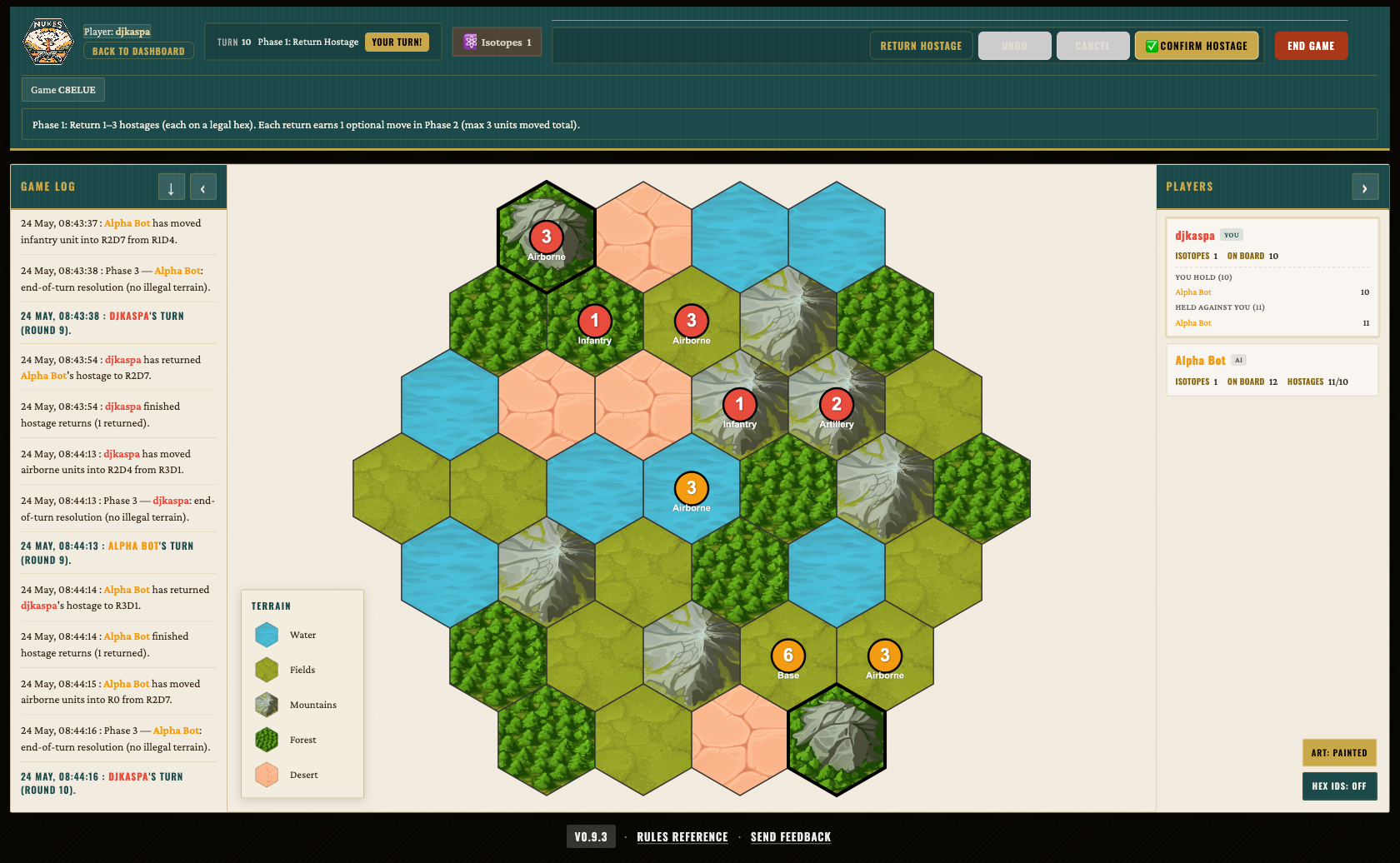
Nukes is live online. Create private sessions, hand off between phone, tablet and laptop. Pause a session in May, finish it in October. The board waits.
One universal engine ships as an MCP server. Any AI agent can start a game, query rules, roll an oracle, or render a board on our infrastructure with a single command.
The merge is done. One universal kernel where every game is a config file and no variant carries code of its own. 10 families, 204 playable variants, 6,527 tests. One platform.
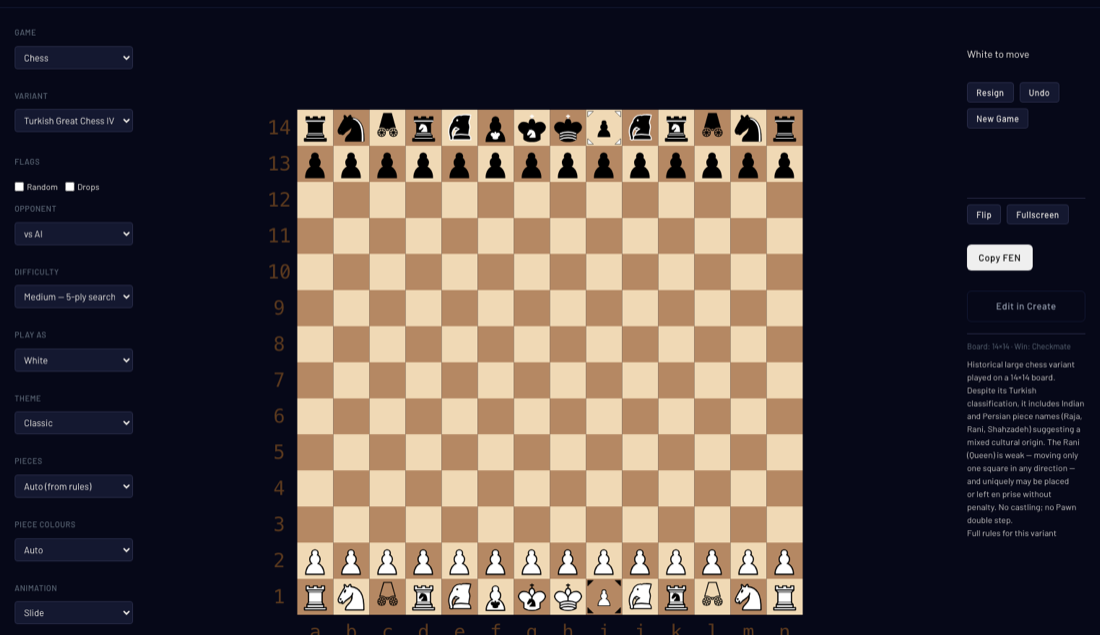
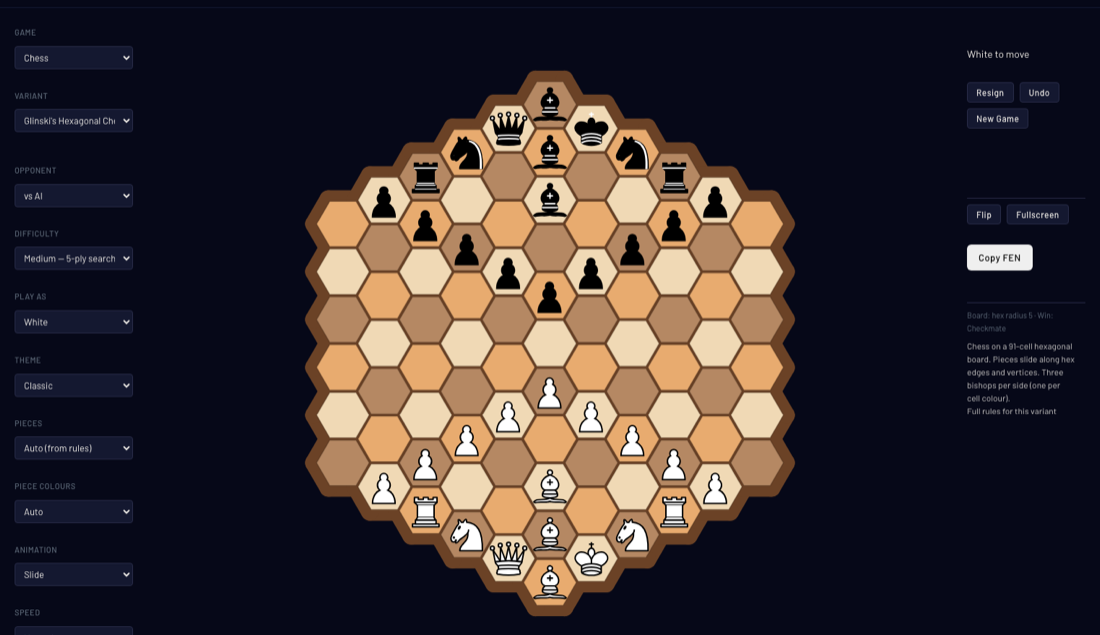
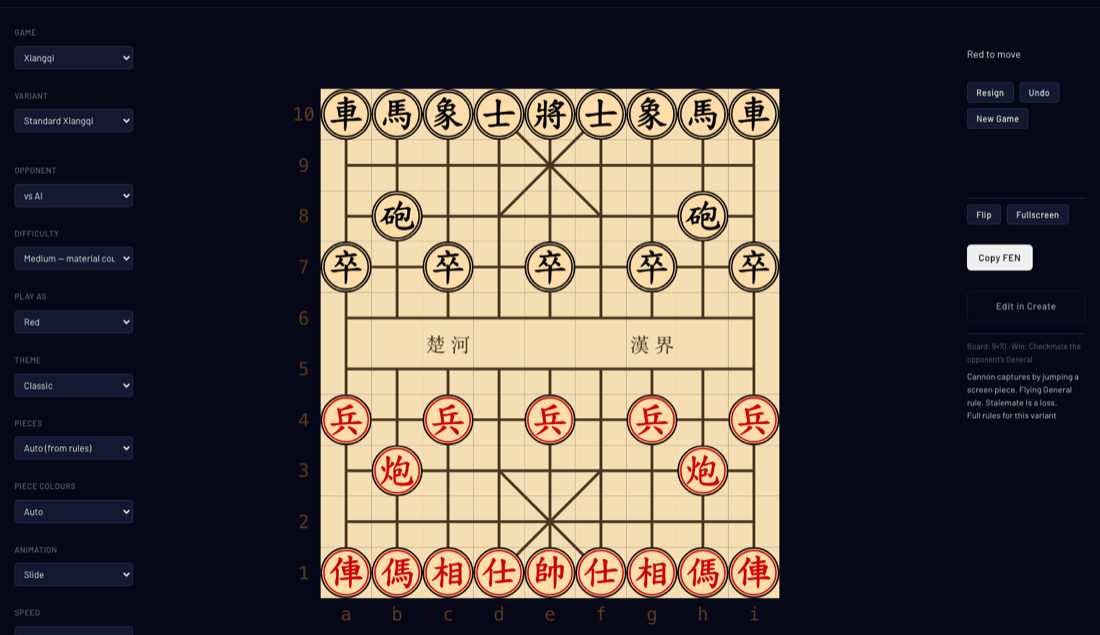
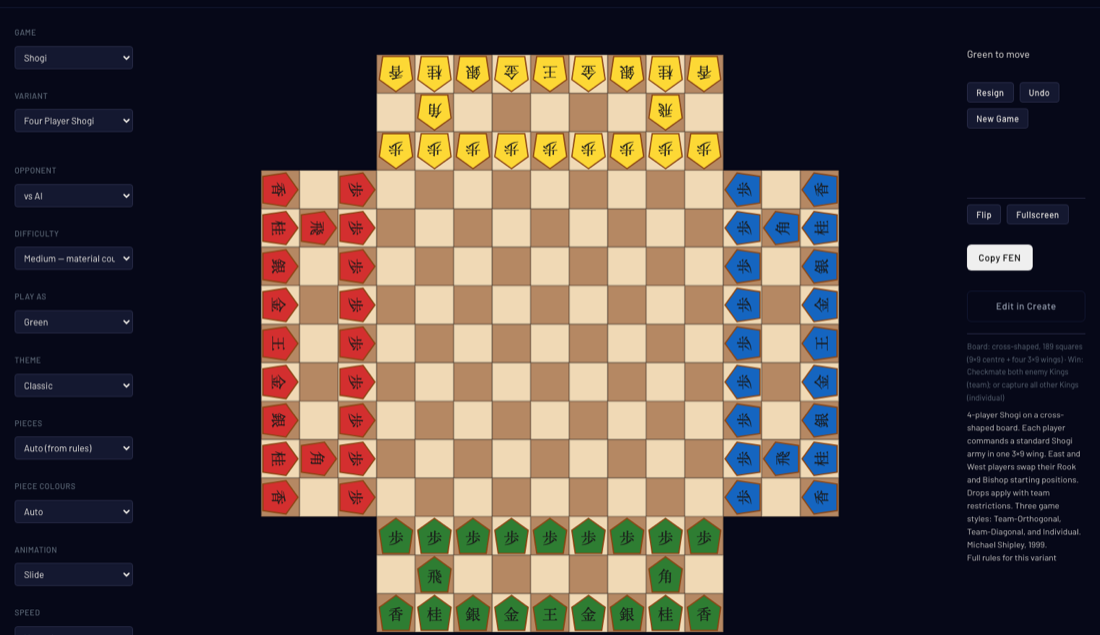
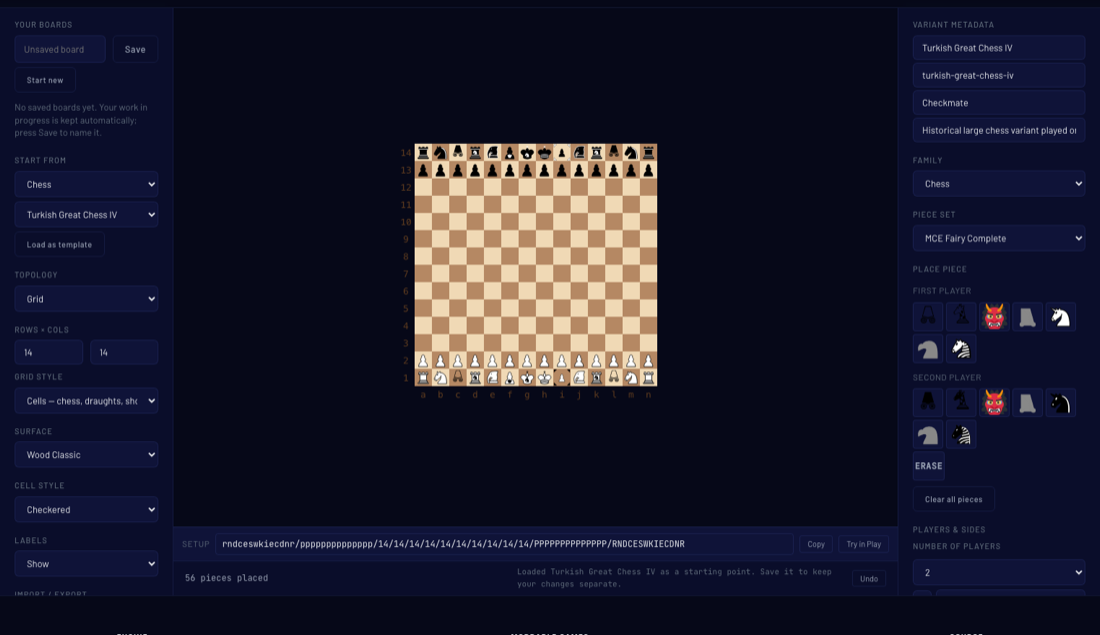
Every game from standard chess to Endless Skies runs from a config file. Plugins compose topology, pieces, and rules. Ship a game by writing YAML.
296 variants documented, 204 of them playable. When adding a game costs zero engineering, the catalogue compounds daily. AI agents write configs, not code.
One engine means one embed API, one SDK, one MCP server for every game. Third-party developers build once, reach every family.
No other tabletop platform offers AI-callable game engines. Ours are live, documented, and connecting to the fastest-growing developer ecosystem in history.
Universal play, rules search, piece gallery, RPG oracles, game utilities across 8 namespaces, all callable by any MCP-compatible agent.
MCP protocol, REST API, OpenAPI spec, llms.txt. Every integration pattern covered from day one.
Native ESM. Import our engines in browser, Node.js, or Cloudflare Workers — no bundler, no transpiler, no config.
Drop-in iframes for dice, decks, oracles, TI4, Nukes, and an API explorer. Auto-resize, themed to the host site, no build step.
Every AI agent that integrates our tools creates switching costs. Network effects compound with each new consumer.
No competing board game engine has MCP integration. We own this category before it has a name.
API usage becomes a revenue line as third-party agents build on our engines at scale.
AI agents research, write, and build games autonomously. The rulebook is the source of truth; engines consume it directly. A small team ships at the pace of a large one.
Agents scan patents, archives, and public domain sources. Verified content only.
Machine-readable markdown with frontmatter. Board topology, pieces, win conditions.
Config-driven board generation, movement primitives, and rule plugins bootstrap a playable game from schema. No hand-coding.
Website auto-generates play pages. Embed via iframe. Print-ready PDF rulebook.
Open-source rules invite PRs. Every variant is a pull request. Catalogue compounds.
AI agents that ship games and serve players. Same MCP tools power both sides.
Total conversion of the hostage mechanic. Recruit tokens by returning to occupied regions. Designed, written, and published autonomously.
Power Cards add explicit asymmetry: Covert Network, Arms Industry, Airborne Corps. Standard Nukes underneath, unique abilities on top.
Biohazard tiles spread each round. Every nuclear strike leaves a growing contamination zone. Win before the map runs out.
Researched from public domain sources, structured as machine-readable markdown, published with PDF and web output.
Original game design for our own IP. Not transcription: creative work guided by game design heuristics.
The same AI-callable tools that power production also serve players in Discord and on the web. One infrastructure, two audiences.
Every one produces legal moves, an end condition, and an AI opponent.
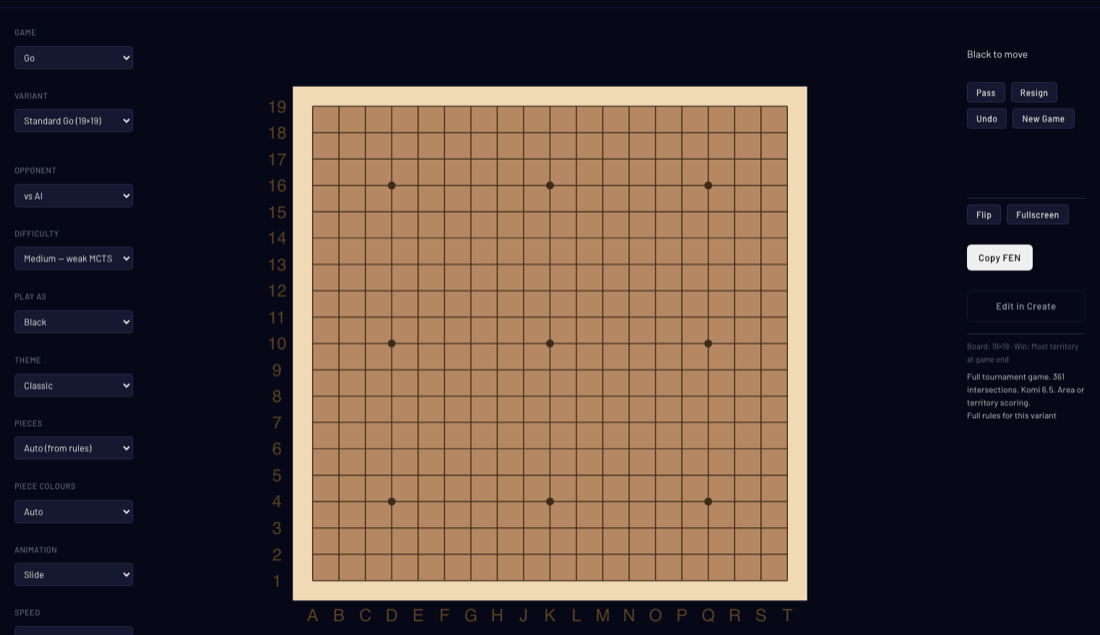
Chess, draughts, go, reversi, shogi, xiangqi, mancala, morris, hex, and The Landlord's Game.
Across 190 suites. A predeploy guard blocks any build where a family stops producing moves.
204 of 296 documented variants are playable today. The gap is the roadmap.
SVG artwork spanning every family, plus 334 board layouts across 33 board families.
Positions with solutions and difficulty ratings, generated across standard and variant play.
Tabletop RPG generators across 10 systems, backed by 3,385 searchable entities.
9,765 pages of print-ready rulebooks generated from the same markdown the engine reads.
The most modded game in history — finally with a home.
Hundreds of variations exist. Most are buried in forum threads and PDFs. Our consumer SDK and public guides let anyone build and publish a variant in minutes — 153 playable today, growing without us.
A modder-founder, a systems-thinker playtester, a board-game evangelist who builds the engine, and a game artist with TV credits.
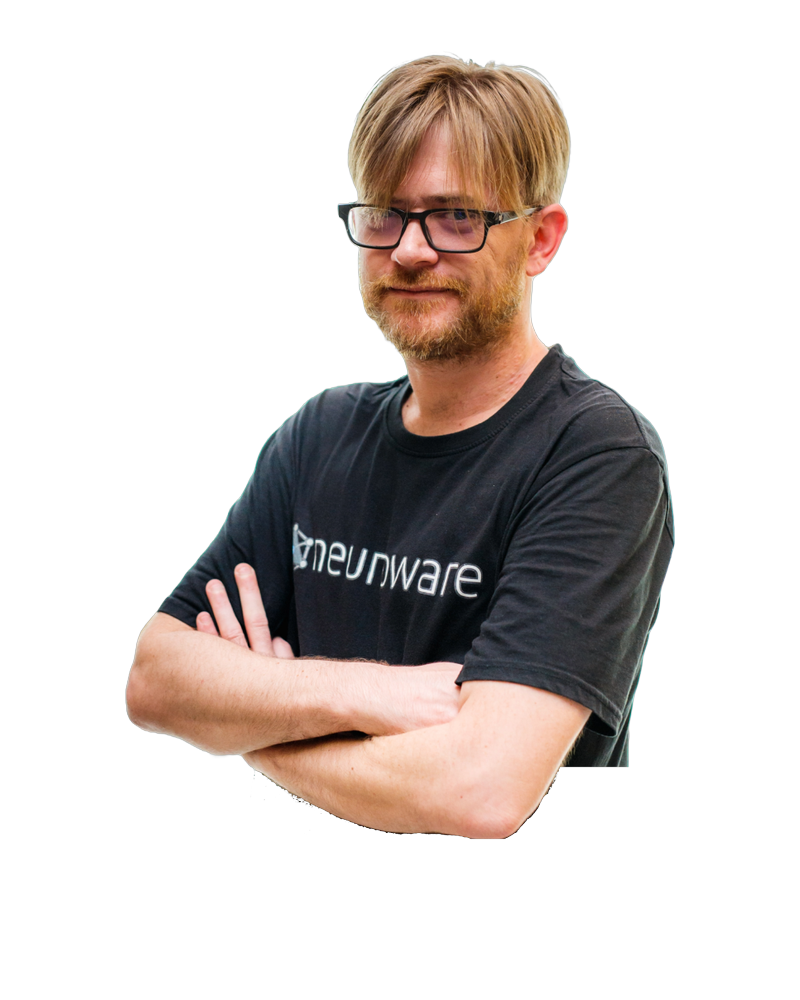
Modder since forever. Built the world's first NoSQL CMS and a 500 Startups-backed Bitcoin wallet.
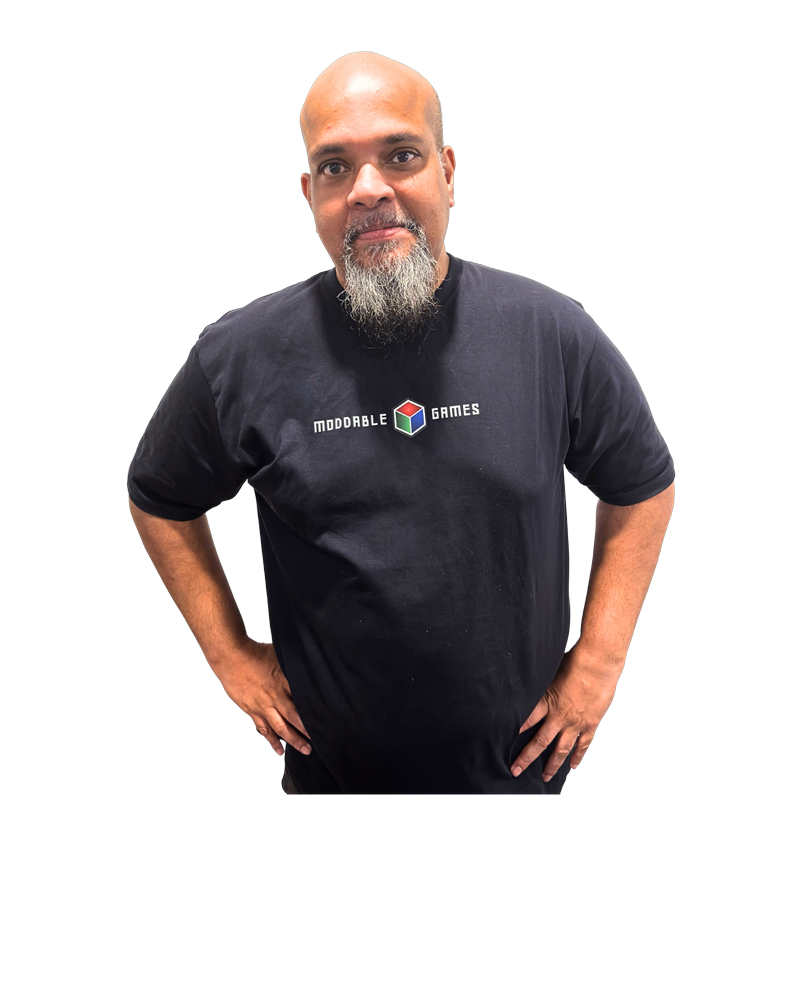
Systems thinker. Chief playtester and social engineer leading online growth, marketing and manufacturing.

Web developer and board-game evangelist. Builds the online engine — grey hair earned the hard way.

Head of creative. BioHack and Mechamato — featured on BoardGameGeek and IMDB.
"Nukes is what happens when you give chess players permission to blow things up. My group hasn't touched the original in months."
"The hex board changes everything. You can't turtle, you can't memorise openings. Every game is genuinely different."
"I backed this because the online engine already works. This isn't vapourware — you can play it right now."
500+ games played in alpha · 2,400+ Discord members · $0 ad spend
Mark Smalley, Founder — team@moddable.games — available for interview, demo, or gameplay session.
45 million Catan owners already have half the tiles they need. A hex-tile strategy game with nuclear brinkmanship that plays in 45 minutes.
Every rulebook is open-source. An online engine lets anyone create, host, and monetise tabletop games without building infrastructure.
Like Steam Workshop meets Etsy — but for board games. Designers upload mods, art, and expansions. The platform handles hosting and fulfilment.
Bootstrapped from Malaysia. Already live in alpha with 2,400+ sessions — now raising $250K–$500K to ship physical games.
Pre-cleared for editorial use. No permission needed — just credit Moddable.Games.
moddable.games/press — ZIP archive with all assets, or browse individually.